There are neighborhoods in Tulsa that people brag about. And then there's Kendall Whittier — a neighborhood that did the hard work, told the truth about what it had become, and built something
Dated: June 25 2026
Views: 37
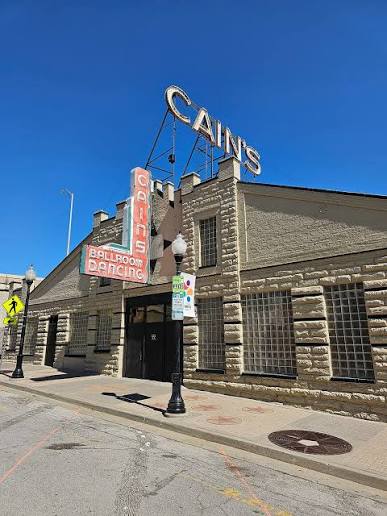
There's a building at 423 North Main Street in Tulsa that has been standing since 1924. It started as a garage. Today Rolling Stone calls it one of the greatest live music venues in America, and musicians who could sell out arenas choose to play there anyway — because of what it is and what happened inside it.
This is the story of Cain's Ballroom.
How It Started
The building went up in 1924. Six years later, in 1930, Madison W. "Daddy" Cain bought it and turned it into Cain's Dance Academy — a dime-a-dance joint where working-class Tulsans came to move, fall in love, and forget about whatever was weighing on them that week. Ten cents a dance. Prohibition bootleg whiskey bought in the alley out back. A spring-loaded maple dance floor laid in a concentric square pattern that absorbed the rhythm and gave it right back to your feet.
That floor is still there. It has never been replaced.
Bob Wills and the Birth of Western Swing
Bob Wills arrived in Tulsa in the early 1930s after a falling out with his manager, who blocked him from performing on radio stations across Texas and Oklahoma City. Wills talked his way onto KVOO — Tulsa's radio powerhouse — and when the studio crowd outgrew the building, he moved the broadcast to Cain's.
On New Year's Night 1935, Bob Wills and His Texas Playboys took the Cain's stage for the first time. They wouldn't stop for nearly a decade.
What Wills was doing was new. He took country and western music and ran it through jazz, blues, big band swing, boogie, rhumba, and jitterbug until it came out the other side as something nobody had a name for yet. They called it Western swing. The King of Western Swing. And the throne was right here in Tulsa.
Wills held weekly dances at Cain's, a daily noon broadcast on KVOO, and a midnight radio show that once overwhelmed the entire Southwestern Bell telephone switchboard with long-distance callers — at three in the morning. Fans drove in from Texas, Missouri, Illinois. The banner above the Cain's stage still reads "Home of Bob Wills" and it always will.
Wills left Tulsa for California in 1943. His brother Johnnie Lee kept the broadcasts going for years after. Bob came back in 1957 but the era had passed. He was inducted into the Country Music Hall of Fame, the Rock and Roll Hall of Fame, and received a Grammy Lifetime Achievement Award. He died in 1975.
Something Worth Noting
Even during the most segregated years in Tulsa's history, Cain's booked Black artists. Count Basie played here. Ernie Fields and his Royal Entertainers — a Tulsa-based band — became the first African American act to perform at Cain's. That's worth saying out loud.
The Dark Years
After Wills left, the music changed and Cain's didn't keep up. Poor management, shifting tastes, and shrinking crowds left the ballroom virtually empty through the 1960s. A woman named Marie Meyers bought it in 1972 and tried to bring the dances back. It didn't work.
By 1976 Cain's was on life support.
Larry Shaeffer and the Resurrection
In 1976 a concert promoter named Larry Shaeffer bought Cain's Ballroom for $60,000 — money he'd made booking a Peter Frampton show at the Tulsa Fairgrounds that same year. He started booking rock acts, punk bands, emerging artists. He turned it into a place where baby bands could prove themselves and touring acts could find a crowd that actually cared.
Then on January 11, 1978, the Sex Pistols rolled in on a snowy Tuesday. They were one of only seven stops on their only North American tour. Sid Vicious, somewhere between chaos and self-destruction, punched a hole in the green room drywall with a set of brass knuckles. That hole has been carefully removed, preserved, framed, and put on display. It's still there.
Eric Clapton played a surprise show. The Talking Heads. The Police. INXS. Leon Russell came home. Cain's was back.
What It Is Today
In 2002 a Tulsa neurosurgeon named James Rodgers bought the building with his wife Alice. Today their sons Chad and Hunter run it. They've put money into it — a $2 million renovation in 2023 — while keeping everything that matters exactly as it was.
The spring-loaded maple floor. The neon star. The silver disco ball. The portraits of Bob Wills, Hank Williams, Ernest Tubb, and the rest of them on the walls. The hole Sid Vicious put in the wall.
Jack White has played here so many times it's practically his second home — including a three-night stand and a surprise show in 2024. Green Day showed up on one day's notice in 2021. In 2020 the Los Angeles Times ranked Cain's the fourth best place to hear live music in America. Pollstar ranked it 13th in the world for ticket sales among club venues in 2021.
It holds 1,800 people. Artists who could fill a stadium choose it anyway.
For a local Oklahoma act, playing Cain's isn't just a gig. It's the milestone. It means you made it.
One More Thing
They say Cain's is haunted. Staff and patrons have reported apparitions for years — including, more than once, the spirit of Bob Wills himself, still wandering the building he made famous. There's also a Lady in Red seen moving through the ballroom after hours.
Make of that what you will. But if Bob Wills decided to stick around, you can't exactly blame him.
Cain's Ballroom is open. Shows run almost every night. If you haven't been — go.
Richard Johns is a lifelong north Tulsan, Will Rogers High grad, and broker associate with Avenue 23 Realty. He believes knowing a city means knowing all of it.

I’m Richard Johns, a Tulsa native and licensed real estate broker with over 17 years of experience helping people navigate one of the biggest decisions of their lives. Tulsa isn’t just whe....
There are neighborhoods in Tulsa that people brag about. And then there's Kendall Whittier — a neighborhood that did the hard work, told the truth about what it had become, and built something
The Day Leon Russell Looked Out a Window and Changed EverythingIt was a lunch break.Leon Russell and his Shelter Records partner Denny Cordell were sitting in a booth at The Ranch House Restaurant
It started as a boarding school for Native American girls in Muskogee with no money, no campus, and no guarantee it would survive the year.Today it sits on 230 acres of Collegiate Gothic
There's a neighborhood in Tulsa that most people drive through without realizing they're in it. It sits just east of downtown, bordered by the highway to the north and Route 66 to the south, and it
 MLS Technology® Oklahoma; All information deemed reliable but not guaranteed. All properties are subject to prior sale, change or withdrawal. Neither listing broker(s) or information provider(s) shall be responsible for any typographical errors, misinformation, misprints and shall be held totally harmless. Listing(s) information is provided for consumer's personal, non-commercial use and may not be used for any purpose other than to identify prospective properties consumers may be interested
in purchasing. The data relating to real estate for sale on this website comes in part from the Internet Data Exchange program of the Multiple Listing Service. Real estate listings held by brokerage firms other than Avenue 23 Realty may be marked with the Internet Data Exchange logo and detailed information about those properties will include the name of the listing broker(s) when required by the MLS. Copyright ©2026 All rights reserved.
Last Updated: September 22, 2026 1:54 PM UTC
Show More...
MLS Technology® Oklahoma; All information deemed reliable but not guaranteed. All properties are subject to prior sale, change or withdrawal. Neither listing broker(s) or information provider(s) shall be responsible for any typographical errors, misinformation, misprints and shall be held totally harmless. Listing(s) information is provided for consumer's personal, non-commercial use and may not be used for any purpose other than to identify prospective properties consumers may be interested
in purchasing. The data relating to real estate for sale on this website comes in part from the Internet Data Exchange program of the Multiple Listing Service. Real estate listings held by brokerage firms other than Avenue 23 Realty may be marked with the Internet Data Exchange logo and detailed information about those properties will include the name of the listing broker(s) when required by the MLS. Copyright ©2026 All rights reserved.
Last Updated: September 22, 2026 1:54 PM UTC
Show More...
